Solitaria: Word Puzzle Game
Malpa GamesWord
4.887.00 Reviews
- Version
- 0.5.0
- Installs
- 500.00K
- Age Rating
- Everyone
Screenshots
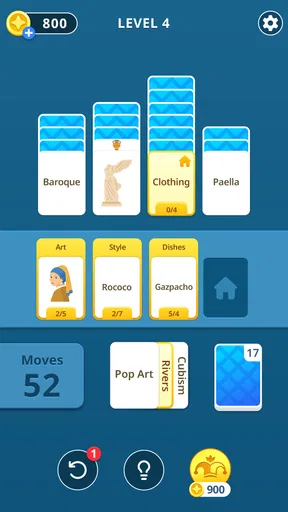
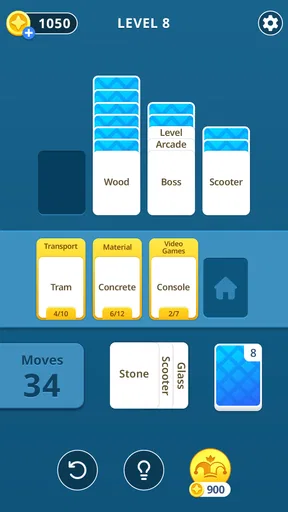
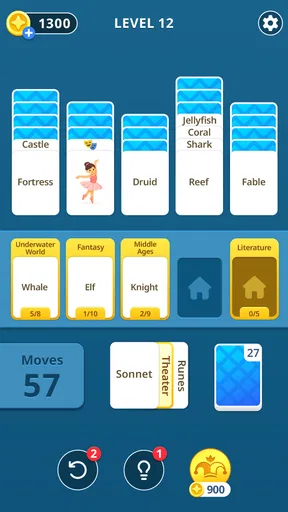
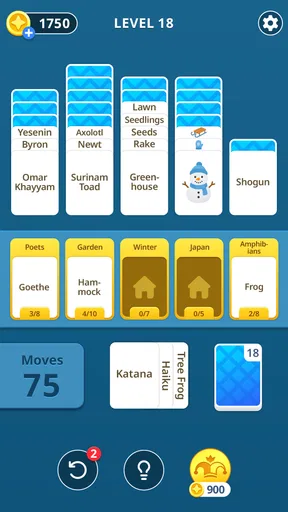
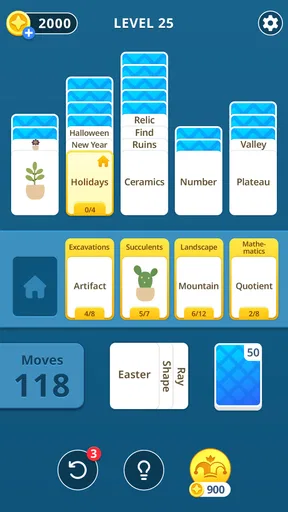
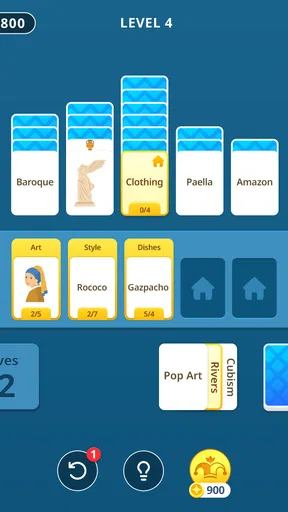
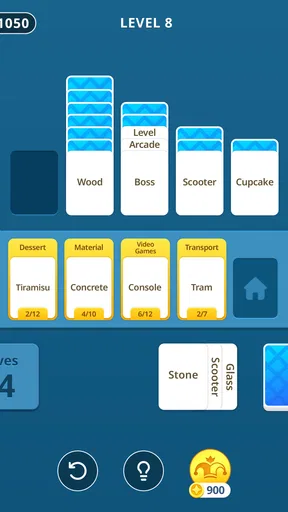
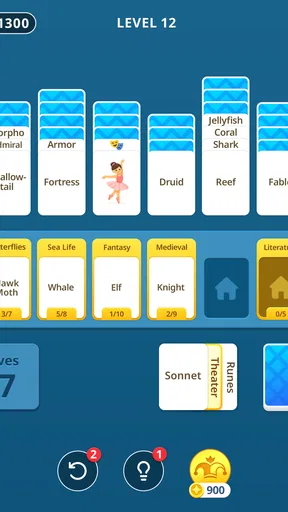
Our Review of Solitaria: Word Puzzle Game
 Analysis by Appyee
I approached Solitaria: Word Puzzle Game expecting a light word title, but its central idea is more interesting than that label suggests. Instead of asking me to solve isolated clues, it places word play inside a solitaire-like sorting routine. The result is a game that rewards both vocabulary and careful arrangement, making each short session feel closer to tidying a small puzzle space than completing a traditional crossword.
That combination is the reason I kept returning to it. The familiar card-game influence makes the basic interaction easy to understand, while the word element gives each move a little more purpose than simply revealing or stacking cards. It is a free game from Malpa Games, rated for Everyone, and its published average sits at 4.8 from around 8.9 thousand ratings. Those figures suggest that the simple format has found an audience, but the real question is whether the blend works for the way you like to play.
Why the word-solitaire idea matters
The strongest capability here is the way word sorting turns a familiar solitaire rhythm into a language exercise. In a normal card game, I am mainly thinking about suits, ranks, and which move opens the next option. In this game, I also have to recognize useful letter combinations and decide whether a tempting move will help or restrict the board later. That extra layer changes the pace without making the game feel academically demanding.
I found the design most appealing when I wanted something quieter than a competitive word game. There is no need to race another player or produce an impressive answer under pressure. I can look at the available pieces, test a possible sequence mentally, and make a decision at my own speed. That makes the game approachable for adults who enjoy sorting puzzles but do not necessarily want a full-length card session.
The important distinction is that the word element is not just decoration around a standard solitaire shell. It affects how I evaluate the board. A move that looks useful because it clears space may be less valuable if it leaves awkward letters behind. Conversely, an apparently modest placement can create a better chain for later. This gives the game a small but satisfying planning curve: I am not only asking what I can do now, but what kind of board I am creating for the next few moves.
That capability also gives the game a different personality from a crossword or a conventional anagram app. Crossword solving usually depends on clues and precise answers. Anagram games tend to focus on finding as many words as possible from a fixed group of letters. Here, the attraction comes from the relationship between word recognition and orderly progression. I am solving the position as much as I am solving the word.
What a typical session feels like
In practice, I play it in small bursts. I can begin with the intention of spending only a few minutes, inspect the arrangement, and make a handful of moves without needing to remember a long story or a complicated ruleset. That makes it a natural fit for a coffee break, a waiting room, or the quiet part of an evening when I want to use my phone without committing to a large game.
The opening moves are usually the easiest because the board offers more obvious possibilities. The interesting decisions arrive when several options seem valid. At that point, I stop treating each move as an isolated action and start looking for the sequence that preserves flexibility. This is where the solitaire influence earns its place: clearing one area can expose another, and the order of those actions matters.
I recommend resisting the urge to make the first attractive word immediately. A better habit is to scan the whole visible layout before touching anything. Look for letters that appear difficult to place, identify moves that open the most space, and consider whether a short word now could block a more useful arrangement later. This simple pause is one of the most effective ways to make the game feel more strategic without turning it into work.
Another useful approach is to separate “progress” from “prettiness.” A tidy-looking group is not automatically the best group. Sometimes leaving a messy area temporarily gives me access to a letter or position that is more important. Players who naturally organize everything as soon as possible may need to adjust to this. The board is not only something to clean up; it is a set of future possibilities.
I also noticed that the game suits a low-distraction routine better than a long, uninterrupted marathon. The pleasure comes from making a few thoughtful decisions and seeing the arrangement improve. If I continue for too long, the basic loop can begin to feel repetitive, especially when I am not in the mood to analyze another similar board. Its strength is focused relaxation, not endless variety for its own sake.
The best everyday use
The clearest scenario for me is a short break during a busy day. Imagine having ten minutes before an appointment: a social multiplayer game may ask too much attention, while a full puzzle campaign may be inconvenient to pause. This title gives me a contained activity with enough mental texture to feel worthwhile. I can play carefully, stop when I need to, and return later without needing to rebuild a complicated mental context.
It also works well as a wind-down game. The word component keeps my attention gently occupied, while the solitaire structure avoids the urgency found in timed word battles. I would not describe every session as completely effortless, because difficult arrangements still require concentration, but the pressure is self-directed. I can choose to think harder or simply make the most obvious move and enjoy the sorting process.
For older family members or casual players, the Everyone rating and straightforward concept make it less intimidating than many modern word games. The vocabulary challenge is present, but the presentation does not require familiarity with competitive rankings or elaborate progression systems to understand the basic appeal. I could hand it to someone who already enjoys solitaire and explain the premise quickly.
There is also a useful learning-adjacent benefit, although I would not treat it as a formal language course. The game encourages me to notice letter patterns, endings, and combinations in context. That can be pleasant for someone who likes words and wants a little mental exercise. Still, anyone looking for definitions, pronunciation guidance, or structured vocabulary lessons should choose a dedicated language app instead. This game uses words as puzzle material, not as lessons.
Where it differs from familiar alternatives
Compared with classic solitaire, the appeal is less about card mastery and more about the extra interpretation required by the word layer. A traditional solitaire player who enjoys pure probability, suits, and ranks may find the change refreshing, but someone who wants an exact recreation of a familiar card table may prefer a conventional solitaire app. This is a variation built around word decisions, not a replacement for every classic rule set.
Compared with crossword games, the experience is more visual and spatial. I spend less time reading clues and more time judging placement. That makes it a better choice when I want a puzzle that begins immediately, without needing to parse a question or search for a specific fact. On the other hand, crossword fans who enjoy clever clues, cultural references, and a strong sense of discovery may find the sorting focus less expressive.
Compared with fast anagram games, it is calmer and more deliberate. I am not constantly chasing a timer or trying to beat another score in a burst of word production. The trade-off is that it may feel less exciting for players who thrive on speed. Its satisfaction comes from making the board more manageable, not from producing the largest possible word before the clock runs out.
That distinction helps clarify who should skip it. If you need action, competitive matchmaking, a deep narrative, or a constantly changing set of mechanics, this is probably too restrained. It is also not ideal if you dislike games where the best move is sometimes unclear. The uncertainty is part of the puzzle, but players who want every action to have an obvious reward may experience it as friction rather than strategy.
Small decisions that improve the experience
My first practical tip is to treat difficult letters as planning anchors. Rather than building the most obvious word from easy letters, I look at which pieces are likely to cause trouble later. If a move helps position an awkward letter or opens a route toward one, it can be more valuable than a move that produces a neat result immediately. This changes the game from reactive sorting into light forward planning.
My second tip is to use a two-pass scan. On the first pass, I identify every legal-looking option without committing. On the second, I compare the consequences: which move opens space, which one consumes a useful letter, and which one leaves the fewest awkward leftovers? This takes only a moment once it becomes a habit, but it makes the puzzles feel more readable and reduces impulsive dead ends.
A third insight is that the game is best enjoyed when I accept partial progress. I do not need to solve the entire arrangement in one brilliant sequence. Sometimes the right goal is simply to improve the position and preserve choices. That mindset is especially helpful for casual players, because it removes the feeling that a less-than-perfect move has ruined the session. The game becomes a series of manageable decisions rather than a test of flawless vocabulary.
Finally, I would play it with expectations suited to its scale. Its current version is 0.3.3, so I see it as a focused word-solitaire experience rather than a huge platform with countless unrelated modes. The published install figure is over 100 thousand, which gives it a meaningful player base, but I would still approach it for the core loop: sorting, spotting patterns, and gradually improving a puzzle position.
Free to start, with a point to consider
The game is free to download, which makes trying the central idea easy. That is important here because the blend of solitaire and word play is personal: some players will immediately enjoy the slower planning, while others will miss the directness of a crossword or the speed of an anagram challenge. I would install it first for the basic experience and decide based on whether the board decisions feel satisfying.
There are in-app purchases ranging from $1.99 to $99.99 per item. That range is worth keeping in mind before spending money, particularly if I am the kind of player who makes small purchases casually and then loses track of them. The free entry point is a genuine advantage, but the presence of optional purchases means I would set a personal limit in advance rather than treating every offered convenience as necessary.
Device compatibility also matters. The minimum operating-system requirement is version 12, so I would check the phone or tablet before recommending it to someone with an older device. For a newer iPhone or Android device running a supported system, that should be a simple check; for an older family handset, it may determine whether the game is practical at all.
Who gets the most from it
I think the best audience is someone who already likes solitaire but wants a little more mental involvement, or someone who enjoys word puzzles but prefers visual arrangement to clue solving. It is especially suitable for players who appreciate short, self-paced sessions and do not need a competitive layer to stay interested.
It can also suit people who want a gentle routine for breaks. The combination gives the hands something to do and the mind a small problem to untangle, without demanding the sustained attention of a strategy game. I would recommend it to a friend who says, “I want something relaxing, but not completely mindless.” That description matches its strongest use better than calling it simply a word game.
I would be more cautious with players who expect a broad vocabulary challenge. The word decisions are meaningful, but the main pleasure is the interaction between letters and arrangement. If your favorite part of word gaming is learning obscure terms, solving layered clues, or competing for speed, a specialized alternative will probably provide more depth in that exact area.
After spending time with it, my view is positive but specific: this is a good choice when the idea of organizing words through a solitaire-style flow sounds more appealing than chasing scores or solving clues. Its real strength is the quiet planning hidden inside a simple sorting loop. Malpa Games has built a focused experience that is easy to approach, pleasant in short sessions, and just strategic enough to reward patience.
I would not call it the universal word-game recommendation, and the purchase range means I would play the free version carefully before buying anything. But for a supported device and the right mood, it offers a distinctive middle ground between classic card play and casual word puzzling. If you enjoy looking one or two moves ahead, spotting letter patterns, and improving a messy board at your own pace, Solitaria: Word Puzzle Game is worth trying.
Privacy and Permissions
See what permissions an app requests and how it handles your data.
- Wi-Fi connection information
- view Wi-Fi connections
- Other
- view network connections, full network access, control vibration, prevent device from sleeping, read Google service configuration
Verdict
Strengths of Solitaria: Word Puzzle Game
- Relaxing solitaire-style gameplay combined with word-building challenges.
- Short levels make it easy to play during quick breaks.
- Improves vocabulary, spelling, and pattern-recognition skills.
- Simple controls are suitable for both casual and experienced players.
- Progression and varied puzzles help keep the experience engaging.
Limitations of Solitaria: Word Puzzle Game
- Some puzzles may feel repetitive after extended play sessions.
- Later levels can become difficult without using hints or boosters.
- Hints and extra assistance may be limited or tied to in-app purchases.
- Requires patience when letter combinations are less obvious.
- Offline availability and full feature access may vary by device.
Other Releases by Malpa Games
View All


Similar Picks in This Category
View All
Word Search - Word Puzzle Game
Bluetile4.8

Word Search Quest - Puzzles
Blackout Lab4.8

CodyCross: Crossword Puzzles
Fanatee, Inc.4.7

Words of Wonders: Crossword
Fugo Games4.9

Wordscapes: Word puzzle game
PeopleFun4.7

Word Search Explorer
PlaySimple Games4.9
Frequently Asked Questions
What is Solitaria: Word Puzzle Game?
Solitaria: Word Puzzle Game is a casual word game that combines classic solitaire-style card mechanics with vocabulary challenges. Instead of simply arranging cards, players solve word-related puzzles while progressing through short, relaxing levels. Its format is designed for quick sessions, making it suitable for players who enjoy brain-training games, spelling challenges, and light card gameplay without the pressure of a competitive multiplayer experience.
How do you play Solitaria: Word Puzzle Game?
Gameplay generally involves completing word objectives by selecting, arranging, or matching letters and cards according to the rules shown in each level. As you progress, puzzles can become more demanding and may require better planning, a wider vocabulary, and careful use of available moves. The game is easy to understand at first, but later stages encourage strategic thinking rather than random tapping.
Is Solitaria: Word Puzzle Game free to download and play?
Solitaria: Word Puzzle Game can typically be downloaded for free, although the exact availability and purchase model may depend on whether you use Android or iOS. Free versions of this type of game commonly include optional advertisements, extra lives, hints, or in-app purchases. Before downloading, check the store listing for current pricing, supported devices, and any paid features.
Can Solitaria: Word Puzzle Game be played offline?
Some parts of Solitaria: Word Puzzle Game may work without a constant internet connection, especially previously loaded levels and basic single-player gameplay. However, advertisements, cloud synchronization, updates, rewards, or certain online features may require access to the internet. If offline play is important to you, test the game in airplane mode after installation and review the developer’s current store information.
Is Solitaria: Word Puzzle Game suitable for children and beginners?
The game is generally approachable for beginners because its core mechanics are introduced gradually and individual rounds are usually easy to understand. Its suitability for children depends on the recommended age rating, advertising, in-app purchases, and the child’s reading ability. Parents should review the store rating and privacy details, and consider enabling device-level purchase restrictions before allowing younger players to use it.
Play our best games!


